

WISeSat.Space Holdings Corp. stocks have been trading up by 15.11 percent amid strong investor optimism over its latest satellite expansion.
Key Takeaways
- WISeSat.Space has completed its business combination with Columbus Acquisition Corp and is now trading independently on Nasdaq under ticker SAIQ as a post‑quantum‑secure satellite communications and IoT connectivity company.
- Following completion of the business combination, WISeSat.Space shares surged between about 260% and over 500% with trading volume exploding versus prior averages.
- WISeSat.Space completed a $10M PIPE investment from affiliate SEALSQ to fund cybersecurity, next‑generation satellites, and secure post‑quantum communications, but the stock fell roughly 27% on the announcement.
- The company launched and deployed a new‑generation satellite developed and operated by partner FOSSA Systems on a SpaceX mission, sparking a 66% share price spike on heavily elevated volume.
- WISeSat.Space is positioned as the space infrastructure partner for the Quantum Spatial Orbital Cloud initiative, planning to operate a secure orbital cloud of up to 100 satellites through 2033, with the first QSOC payload targeted for launch in Q4 2026.
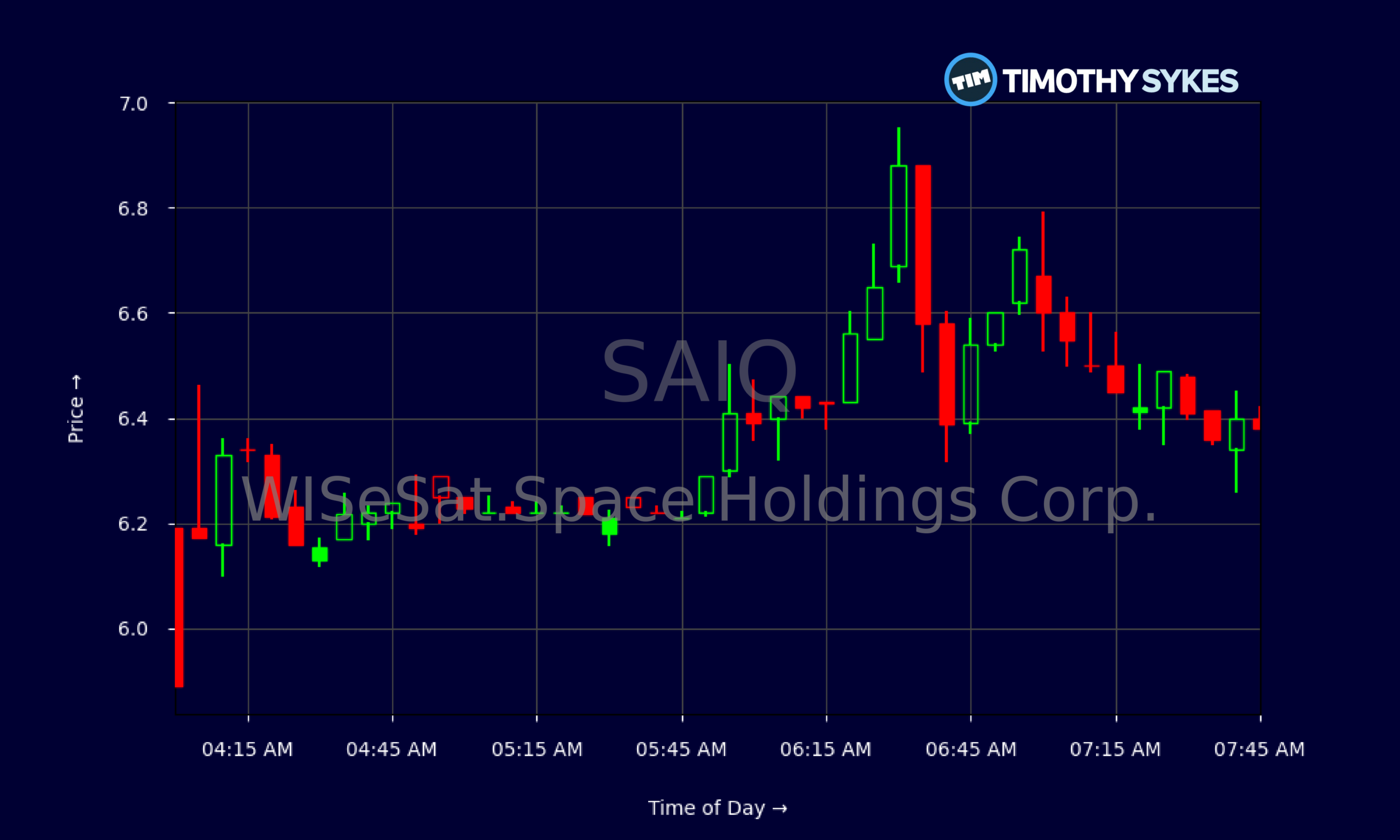
Live Update At 07:47:31 EDT: On Thursday, October 22, 2026 WISeSat.Space Holdings Corp. stock [NASDAQ: SAIQ] is trending up by 15.11%! Discover the key drivers behind this movement as well as our expert analysis in the detailed breakdown below.
Quick Financial Overview
WISeSat.Space Holdings Corp. (SAIQ) has gone from SPAC obscurity to a high‑volatility space‑tech story in a matter of days. Since SAIQ began trading on Nasdaq after closing its business combination with Columbus Acquisition Corp on 2026/10/02, the tape has traded like a small‑float momentum rocket.
The first session as SAIQ saw the stock close near $1.85 after heavy SPAC‑deal interest. Then came the fireworks. On 2026/10/05, SAIQ ripped intraday toward $9.94 before fading to a $6.67 close — still a huge percentage move off the prior level. The next day, a $10M PIPE from affiliate SEALSQ pressured the name, with traders reacting to dilution and driving a sharp pullback to a $5.16 close.
More Breaking News
From there, SAIQ settled into a wide range between roughly $3 and $7 as traders digested the headlines. The latest daily print on 2026/10/21 shows a close at $5.56 after a $5.95 high and $4.99 low, underscoring the ongoing intraday swings. Intraday premarket action around $6–$6.80 shows active trading and tight, liquidity‑driven waves. Revenue remains tiny at about $0.20M, while enterprise value near $203.8M signals a classic early‑stage, story‑driven space name where sentiment and news flow dominate fundamentals.
Why Traders Are Watching SAIQ
SAIQ has become a textbook momentum ticker that active traders love and longer‑term players fear. The core catalyst was WISeSat.Space completing its business combination with Columbus Acquisition and listing independently on Nasdaq as SAIQ, a post‑quantum‑secure satellite communications and IoT connectivity play inside the broader WISeKey ecosystem. That fresh listing, small float, and hot “space‑plus‑cybersecurity” narrative set the stage.
Once the deal closed, the stock went vertical. Reports showed WISeSat.Space shares jumping about 260% and, in premarket action, over 500% as speculative traders piled in. Volume exploded compared to prior averages, turning SAIQ into a crowded day‑trading arena. This is typical for new SPAC de‑SPAC names with a clear story and limited supply — every headline acts like fuel.
Then came the $10M PIPE funding from SEALSQ to back cybersecurity work, next‑gen satellites, and secure post‑quantum communications. Fundamentally, that capital helps SAIQ push its roadmap. But traders hated the dilution and knocked the stock down roughly 27% on the news. That move showed how fragile early euphoria can be.
The story reignited when WISeSat.Space launched and deployed a new‑generation satellite with partner FOSSA Systems on a SpaceX mission. That mission triggered another 66% spike in SAIQ on heavy volume and reminded the market this is not just a shell — hardware is going up. Momentum then kept feeding on itself: a later premarket jump of 52%, on top of a 7.9% prior‑day gain, came on pure technical chase with no fresh catalyst.
Layered on top is the long‑term Quantum Spatial Orbital Cloud (QSOC) angle. WISeSat.Space, via SAIQ, is tagged as the space infrastructure partner for a secure orbital cloud targeting up to 100 satellites through 2033, with the first payload aimed at Q4 2026. That gives traders a big‑picture hook, even though the timelines and execution risk are long.
Conclusion
For active traders, SAIQ is the kind of name that rewards speed and punishes hesitation. WISeSat.Space has all the ingredients of a classic momentum story: a fresh SPAC listing, a small early revenue base, big‑sounding themes like post‑quantum security and satellite IoT, and real catalysts such as the SpaceX‑launched FOSSA satellite. Those ingredients have produced multiple bursts — 260% and 500% post‑deal surges, a 66% spike on the launch, and another 52% premarket run on pure momentum.
At the same time, the $10M PIPE from SEALSQ and the roughly 27% selloff around that headline show the other side of the SAIQ trade. Capital raises matter. Dilution matters. When expectations are sky‑high, any whiff of supply can flip the tape in minutes. The tiny revenue base versus a roughly $203.8M enterprise value reinforces that WISeSat.Space is trading more on narrative and chart than on cash flows.
The QSOC role — potentially operating up to 100 satellites through 2033 — is the long runway that keeps SAIQ on watchlists. But traders should treat that as backdrop, not a timing tool. As Tim Sykes likes to remind traders, “The market doesn’t care about your dreams, it cares about your risk management.” That mindset lines up with another one of his core trading lessons: As millionaire penny stock trader and teacher Tim Sykes, says, “You must adapt to the market; the market will not adapt to you.”. For SAIQ, that means respecting the volatility, trading the catalysts, and cutting losses fast when the story cools off. This article is for educational and research purposes only and is not investment advice.
This is stock news, not investment advice. Timothy Sykes News delivers real-time stock market news focused on key catalysts driving short-term price movements. Our content is tailored for active traders and investors seeking to capitalize on rapid price fluctuations, particularly in volatile sectors like penny stocks. Readers come to us for detailed coverage on earnings reports, mergers, FDA approvals, new contracts, and unusual trading volumes that can trigger significant short-term price action. Some users utilize our news to explain sudden stock movements, while others rely on it for diligent research into potential investment opportunities.
Dive deeper into the world of trading with Timothy Sykes, renowned for his expertise in penny stocks. Explore his top picks and discover the strategies that have propelled him to success with these articles:
- Penny Stocks Trading Guide
- Best Penny Stocks Under $1 to Buy Today
- Top 8 Penny Stocks to Watch on Robinhood
Once you’ve got some stocks on watch, elevate your trading game with StocksToTrade the ultimate platform for traders. With specialized tools for swing and day trading, StocksToTrade will guide you through the market’s twists and turns.
Dig into StocksToTrade’s watchlists here:





Leave a reply