

Spotify Technology S.A. stocks have been trading up by 8.41 percent amid bullish sentiment on subscriber and revenue growth potential
Key Takeaways
- New AI remix and cover licensing deal with Believe and TuneCore gives Spotify a paid Premium add‑on while protecting artist rights through opt‑in consent and royalty payments.
- Multi‑year renewal of “The Joe Rogan Experience,” reportedly worth up to about $250M, keeps Spotify’s top podcast franchise and briefly lifted shares 2.3% on the news.
- Cantor Fitzgerald cut its SPOT price target to $490 from $530 but expects a modest Q3 beat and stronger Q4 revenue guidance despite higher AI and regulatory costs.
- Piper Sandler started SPOT at Neutral with a $540 target, seeing slower premium growth but room for margin upside as advertising is rebuilt.
- StoneX moved SPOT from Buy to Hold and dropped its target, highlighting a more cautious near‑term stance among Wall Street firms.
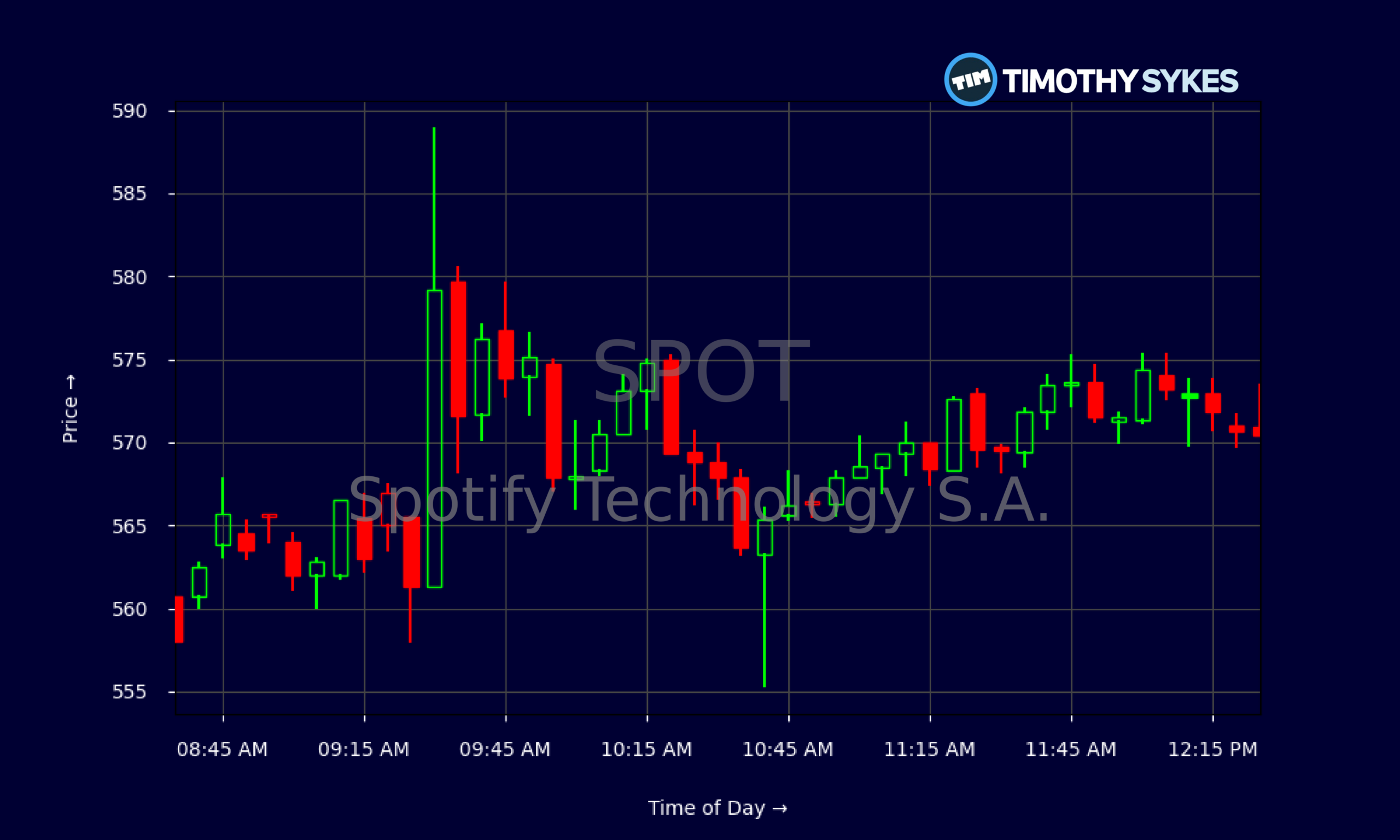
Live Update At 12:32:25 EDT: On Thursday, October 22, 2026 Spotify Technology S.A. stock [NYSE: SPOT] is trending up by 8.41%! Discover the key drivers behind this movement as well as our expert analysis in the detailed breakdown below.
Quick Financial Overview
SPOT has been grinding higher, not parabolic, and that matters for traders. From 2026/09/28 to 2026/10/22, Spotify climbed from around $497 to a $569.60 close, after touching an intraday high near $588.88. That’s a strong multi‑week trend with higher lows and sharp buying on spikes, classic momentum behavior.
Intraday on 2026/10/22, SPOT showed a wide range early, ripping from the $560s up toward $580, then cooling into the high $560s and low $570s. Volatility is elevated but controlled, which is fertile ground for day trading. Dips toward the mid‑$560s repeatedly attracted buyers through late morning and midday.
More Breaking News
Fundamentally, Spotify is now a scale story. Revenue sits near $17.19B, and the market is paying about 5.46 times sales and roughly 11.27 times book value. That tells traders SPOT is priced like a premium growth platform, not a bargain bin turnaround. With enterprise value just under $100B and a healthy cash pile of about $9.47B, the company has firepower for content, AI tools, and marketing, but the bar for continued performance remains high.
Why Traders Are Watching SPOT Right Now
SPOT is sitting at the crossroads of hype and execution, and the latest news flow captures that tension. On the bullish side, Spotify’s new licensing agreement with Believe and TuneCore for an AI‑powered remix and cover tool is exactly the kind of catalyst momentum traders hunt. It adds a paid layer on top of Premium, which can lift average revenue per user if fans adopt the product. Because the tool is opt‑in and royalty‑driven, it also reduces headline risk from angry artists, a key concern when AI hits music.
At the same time, SPOT doubled down on tent‑pole content. The multi‑year renewal of “The Joe Rogan Experience,” reportedly worth up to about $250M, shows Spotify still believes long‑form podcasts anchor engagement and advertising. The stock popped 2.3% on that headline, confirming that traders still reward big‑name deals when they see a clear monetization path.
But the tape is not all green lights. Cantor Fitzgerald slicing its SPOT target to $490 from $530, while still expecting a modest Q3 beat, says a lot. The business is working, yet regulatory charges and rising AI spend are pressuring near‑term margins. Piper Sandler’s Neutral initiation at $540 and StoneX’s downgrade from Buy to Hold hammer home the same message: the story is shifting from pure top‑line excitement to a grind on profitability and cost control. For active traders, that usually translates into range‑bound action punctuated by sharp moves around earnings, guidance, and product updates like the AI remix launch.
Conclusion
For traders who live on price action, SPOT now looks like a battleground between content strength and cost discipline. The AI remix and cover deal with Believe and TuneCore signals that Spotify wants to monetize creativity, not just stream it. The Joe Rogan renewal confirms the platform is still willing to write big checks to keep flagship podcasts in its orbit while opening up broader distribution to chase more advertising dollars.
On the other side of the trade, three cautious calls from Cantor Fitzgerald, Piper Sandler, and StoneX tell you expectations are being reset. SPOT’s premium pricing — a rich price‑to‑sales ratio and hefty enterprise value — means any stumble on margins or user growth can trigger fast downside. Momentum is up, but it is climbing a wall of worry built from regulatory costs and AI spending.
That blend is exactly what short‑term traders should study: strong trend, real catalysts, and clear risk lines. As Tim Sykes likes to say, “The market rewards prepared traders, not hopeful gamblers.” As millionaire penny stock trader and teacher Tim Sykes, says, “It’s not about how much money you make; it’s about how much money you keep.”. For SPOT, that preparation means knowing the key headlines, respecting the volatility around earnings and AI news, and being ready to cut losses fast if the story breaks. This article is for educational and research purposes only and is not investment advice.
This is stock news, not investment advice. Timothy Sykes News delivers real-time stock market news focused on key catalysts driving short-term price movements. Our content is tailored for active traders and investors seeking to capitalize on rapid price fluctuations, particularly in volatile sectors like penny stocks. Readers come to us for detailed coverage on earnings reports, mergers, FDA approvals, new contracts, and unusual trading volumes that can trigger significant short-term price action. Some users utilize our news to explain sudden stock movements, while others rely on it for diligent research into potential investment opportunities.
Dive deeper into the world of trading with Timothy Sykes, renowned for his expertise in penny stocks. Explore his top picks and discover the strategies that have propelled him to success with these articles:
- Penny Stocks Trading Guide
- Best Penny Stocks Under $1 to Buy Today
- Top 8 Penny Stocks to Watch on Robinhood
Once you’ve got some stocks on watch, elevate your trading game with StocksToTrade the ultimate platform for traders. With specialized tools for swing and day trading, StocksToTrade will guide you through the market’s twists and turns.
Dig into StocksToTrade’s watchlists here:





Leave a reply