

Cleveland-Cliffs Inc. faces pressure after weak steel demand and margin concerns, as stocks have been trading down by -5.06 percent.
Key Takeaways
- Barclays modestly raised its Cleveland-Cliffs price target to $11 from $10 while reiterating an Underweight rating in a Q3 metals and mining sector preview.
- JPMorgan reduced its price target on Cleveland-Cliffs from $13 to $12 while maintaining a Neutral rating.
- Cleveland-Cliffs’ Stelco subsidiary will indefinitely idle its cold-rolled and coated steel operations at Hamilton Works in Ontario, citing U.S. tariffs and ongoing trade disruptions that have made the Canadian market for these products unsustainable.
- Canada is threatening legal action, fines, or even a forced sale of Cleveland-Cliffs’ Stelco assets over layoffs tied to prior employment commitments, while the CEO argues that U.S. tariffs and trade disruptions are driving Stelco’s losses.
- Cleveland-Cliffs’ Canadian unit Stelco plans to idle its cold-rolled and coated steel operations at Hamilton Works indefinitely due to disruptions tied to U.S. tariffs, and the stock was recently trading at $11.08, down about 9% on the day.
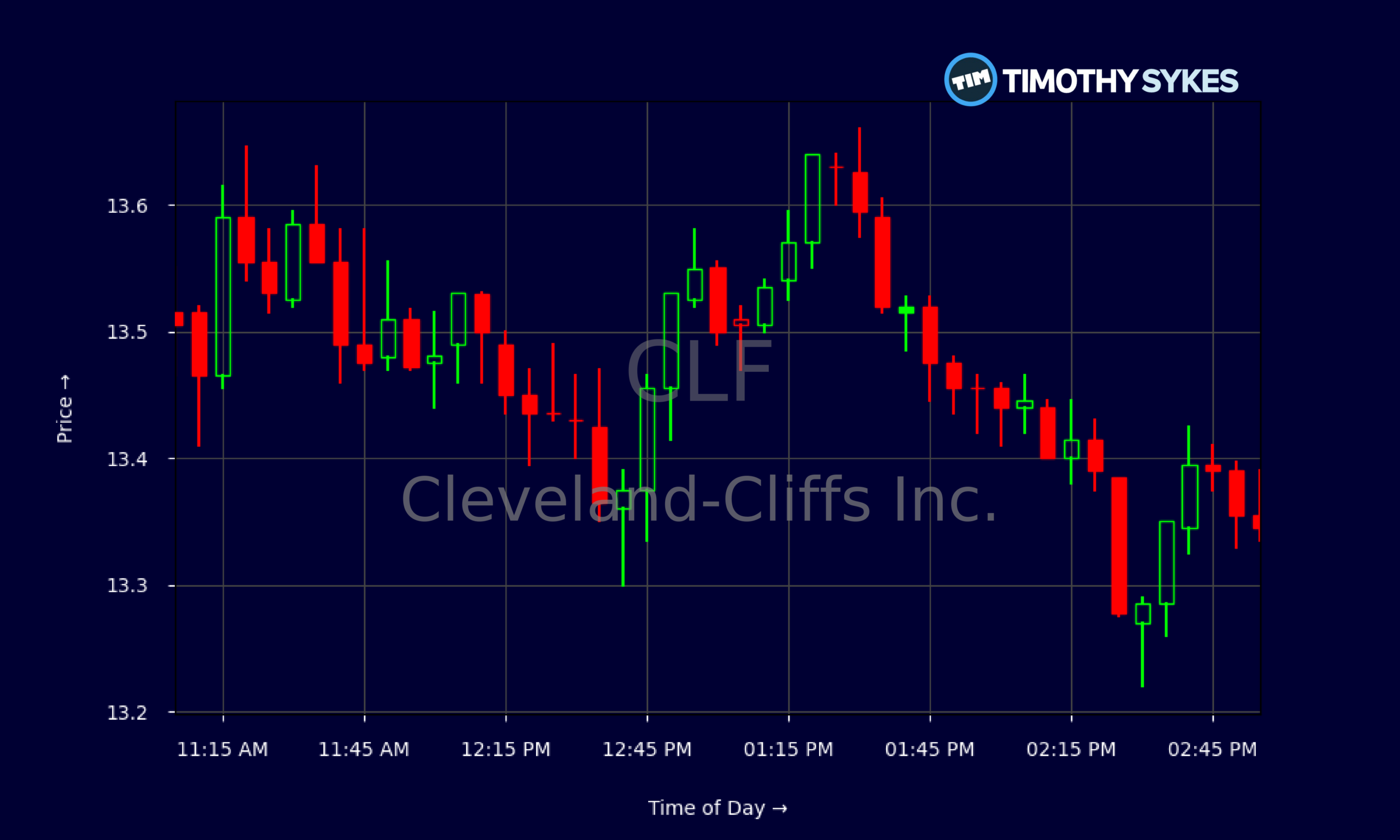
Live Update At 15:02:17 EDT: On Thursday, October 22, 2026 Cleveland-Cliffs Inc. stock [NYSE: CLF] is trending down by -5.06%! Discover the key drivers behind this movement as well as our expert analysis in the detailed breakdown below.
Quick Financial Overview
CLF has been grinding higher in October, but the tape shows a choppy climb. From 2026/09/28 around $11.22, Cleveland-Cliffs stock pushed to a recent close near $13.33, with swings both ways along the path. That’s the kind of volatility short-term traders look for, but it comes with headline risk.
On 2026/09/28, when news hit that CLF’s Canadian unit Stelco would idle some steel operations, the stock was trading at $11.08, down roughly 9% on the day. That sharp hit shows how fast policy shocks can get priced into CLF. Since then, the daily chart has recovered those losses and more, with closes above $13 for several sessions and a spike to $14.58 on 2026/10/19 before pulling back.
More Breaking News
Under the hood, Cleveland-Cliffs posted roughly $5.61B in quarterly revenue and $152M in net income, plus $224M in operating cash flow and $72M in free cash flow. CLF carries about $7.65B in long-term debt and a total debt-to-equity ratio of 1.37, so leverage is real, but the current ratio of 1.9 gives some breathing room. For traders, that mix—thin margins, solid cash flow, and meaningful debt—sets up a name that reacts hard to every macro and tariff headline.
Why Traders Are Watching CLF Tariff And Canada Risks
Traders are zeroed in on CLF right now because the story is bigger than one steel mill. Cleveland-Cliffs is watching its Stelco subsidiary in Canada get squeezed from two sides: U.S. tariffs hitting cross‑border flows and Canadian regulators turning up the heat on labor commitments.
The core operational hit is clear. CLF’s Stelco unit is idling its cold‑rolled and coated steel operations at Hamilton Works in Ontario indefinitely. Management says U.S. tariffs and trade disruptions have made the Canadian market for these products unsustainable. For a vertically integrated steel and mining outfit like Cleveland-Cliffs, shutting a plant is more than a local issue. It signals that certain product lines and regions simply don’t work under current policy.
The market’s reaction was fast. On 2026/09/28, CLF traded at $11.08, down about 9% after the Stelco idling headlines. That move told traders that policy risk is not a slow burn here; it’s a trigger. Any new tariff headline can reset CLF’s chart intraday.
Then the legal angle landed. Canada is now threatening fines, legal action, or even a forced sale of Stelco assets tied to layoffs and prior employment commitments. That pushes Cleveland-Cliffs into a messy mix of politics and law. Traders hate that because it’s hard to model and the timeline is unknown.
Layer on the analyst tone. Barclays nudged its CLF price target up to $11 from $10 but kept an Underweight rating. JPMorgan trimmed its target from $13 to $12 and stayed Neutral. Translation for active traders: the big banks are not chasing upside here. They see either downside or limited reward relative to risk.
For momentum players, that means any spike in CLF on short‑covering or macro hope can run into a wall of cautious sell‑side views and headline overhang from Stelco and Canada.
Conclusion
For active traders, CLF is a real‑time lesson in how macro policy and politics can slam into a balance sheet. Cleveland-Cliffs has solid revenue, positive free cash flow, and a stock that has bounced from the low $11s to the low $13s in a few weeks. But the Stelco story—idled operations, tariff pressure, and Canadian legal threats—hangs over every candle on the chart.
Short term, CLF trades like a news‑driven vehicle. The 9% drop to $11.08 on the Stelco headlines, followed by a grind back above $13, shows both the downside air pocket and the bounce potential. With Barclays sitting at $11 Underweight and JPMorgan at $12 Neutral, the Street is sending a clear message: respect the risk.
That’s exactly the mindset this community pushes. As Tim Sykes loves to remind traders, “The best traders aren’t guessing — they’re reacting to what the market actually does, cutting losses fast and staying disciplined every single trade.” As millionaire penny stock trader and teacher Tim Sykes, says, “There is always another play around the corner; don’t chase just because you feel FOMO.”. With CLF, that means treating every tariff headline, every Stelco update, and every analyst move as a potential catalyst, not a guarantee. This is educational and research material, not a signal; your edge comes from preparation, not prediction.
This is stock news, not investment advice. Timothy Sykes News delivers real-time stock market news focused on key catalysts driving short-term price movements. Our content is tailored for active traders and investors seeking to capitalize on rapid price fluctuations, particularly in volatile sectors like penny stocks. Readers come to us for detailed coverage on earnings reports, mergers, FDA approvals, new contracts, and unusual trading volumes that can trigger significant short-term price action. Some users utilize our news to explain sudden stock movements, while others rely on it for diligent research into potential investment opportunities.
Dive deeper into the world of trading with Timothy Sykes, renowned for his expertise in penny stocks. Explore his top picks and discover the strategies that have propelled him to success with these articles:
- Penny Stocks Trading Guide
- Best Penny Stocks Under $1 to Buy Today
- Top 8 Penny Stocks to Watch on Robinhood
Once you’ve got some stocks on watch, elevate your trading game with StocksToTrade the ultimate platform for traders. With specialized tools for swing and day trading, StocksToTrade will guide you through the market’s twists and turns.
Dig into StocksToTrade’s watchlists here:





Leave a reply